How to get SUCCESS in your life?

Before starting the blog, I wanna ask one question from you..
What is Success?
Most of you will say, to get a good name and fame, to become richest person in life.
No that is not the definition of Success, Success do not means that become rich or get a high name, fame and wealth.
Success can not be defined in one sentence, read the following and find your own success definition and create meaning of your life. :)
1. Success is always doing your best.

Success can be achieved when you try your best in all aspects of everything you do.
2. Success is properly setting concrete goals.

Be realistic and concrete when setting goals. Success does not come from setting abstract goals.
3. Success is having a place to call home.

Home is where your heart soars. You are always successful when you can call a place home.
4. Success is understanding the difference between need and want.

If you can meet your monthly obligations and fulfill your basic needs, you are successful.
5. Success is believing you can.

If you believe you can, you will succeed.
6. Success is remembering to balance work with passion.
Work without passion creates undue stress and empty achievements. Focus on what excites you.
7. Success is taking care of your needs.

Remember to put on your own oxygen mask before assisting others.
8. Success is learning that you sometimes have to say no.
Success only comes with a balanced life. Part of balance is learning to say no.
9. Success is knowing your life is filled with abundance.

Love, health, friends, family… life is filled with abundance.
10. Success is understanding you cannot keep what you don’t give away.
You will only succeed if you help others succeed.
How to be successful in life?
To some, when they think of success, they imagine wealth; others want power; some just want to make a positive impact on the world.
All of these are perfectly valid, indeed success is a concept that means different things to different people. Though no matter what success is to you, it almost certainly isn’t something will come easily.
There are countless guides and books to being successful, however, as success is personal and unique to each individual. The advice contained in these books can often not be relevant. Therefore following the advice of a single individual can often be unhelpful.
With this in mind, considering the advice of a great many people, people whose ideas of success were different both to each other, and quite possibly, to you can be a good alternative.
If you want to learn how to be successful, these tips are essential:
1. Think Big
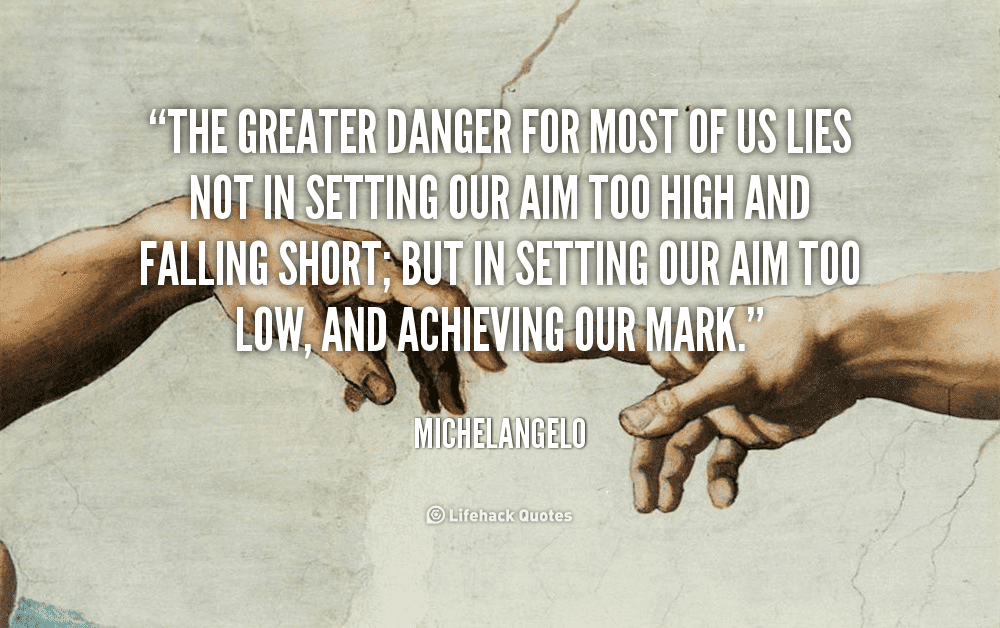
From Michelangelo Buonarroti, Great Renaissance Artist:
“The greater danger for most of us lies not in setting our aim too high and falling short; but in setting our aim too low, and achieving our mark.”
There are few artists as influential as Michaelangelo. Today centuries after his death, his work still inspires and connects to people. His work is world famous, just think of his statue of David, or the Mural in the Sistine Chapel in the Vatican.
Imagine then, if he decided not to work as an artist.
Being a successful artist has always been extremely difficult, imagine if he decided to give up this ambition in favour of something easier?
Oftentimes, people often decided to put their dreams aside for something more “realistic”. To give up their dream for something easier. This quote teaches us the danger of such a point of view.
Instead be ambitious.
Instead be ambitious.
2. Find What You Love to Do and Do It

From Oprah Winfrey, Media Mogul:
“You know you are on the road to success if you would do your job and not be paid for it.”
This is a good quote to remember and think about when you’re at work.
Imagine being as successful as possible in your current job. Ultimately you’ll probably find yourself working extremely hard and this it will take up much of your time.
If it’s a job you hate, then being successful at it might only mean filling your life with something you hate to do. What’s the sense in this?
Instead, why not focus on doing something you love? When you’ve found what you’re passionate about, you get the motivation to keep you moving. Success at this means the fulfilment of your dreams.
Even if you’re not successful, you still filled your time with something you love to do. Many successful musicians spent years of their lives doing unpaid performances, the only reason they kept playing was because they loved to perform.
3. Learn How to Balance Life

From Phil Knight, CEO of Nike Inc.:
“There is an immutable conflict at work in life and in business, a constant battle between peace and chaos. Neither can be mastered, but both can be influenced. How you go about that is the key to success.”
All too often, people think that to be successful, they need to make the object of their success their life.
If a person thinks their job will lead them to success, then they may spend countless hours per day, and well into the evening working hard.
However this comes at the cost of rest, your health and having an enjoyable life. Ultimately they may burn out and cease to be successful at their job anyway.
If success comes from having a strong social life and a good group of friends, their job may suffer; meaning that they may lose their job, and then be unable to afford going out with friends.
In these ways, success, as Phil Knight says above, is helped by balance. Think of it as a balance between rest and work, or work and play.
4. Do Not Be Afraid of Failure

From Henry Ford, Founder of Ford Motors:
“Failure is simply the opportunity to begin again, this time more intelligently.”
There is a story, it’s unconfirmed whether it actually happened, yet the message within is none the less true:
Thomas Edison inventing the lightbulb was the result of several hundred failed attempts. In an interview, he was asked “How do you feel after all of your failed attempts?”
His response was great, “I didn’t fail, I learned hundreds of ways not to invent the lightbulb”
He saw each “failure” as a lesson. From that lesson he learned what won’t work, and also might work instead.
Each failed attempt, each rejection, were key steps on his path to success. It is easy to feel like you should give up after a failure. But perhaps in that failure is a lesson.
Pay attention to your failures, study them. Perhaps then you’ll learn how to success.
5. Have an Unwavering Resolution to Succeed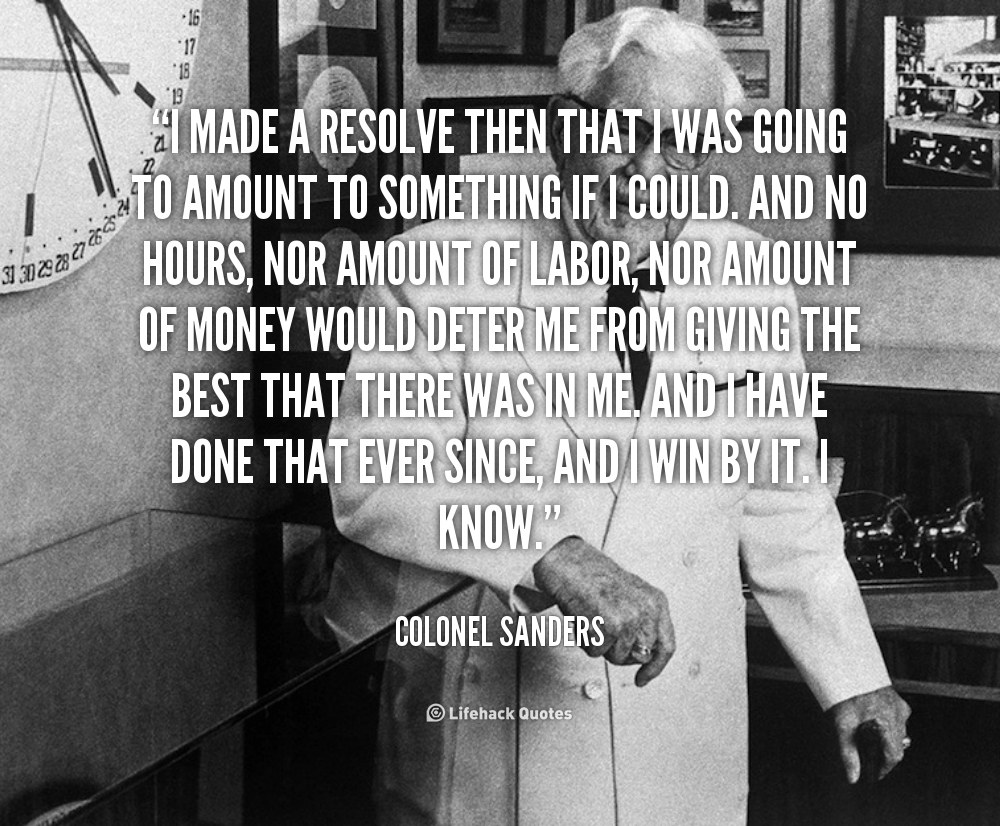
NOW ALSO ONE THING IS MISSING...
THAT IS YOUR ATTITUDE
If you truly want to be successful, your number one task should be to create and maintain a positive attitude. When you've got an attitude of optimism, expectancy and enthusiasm, opportunities grow, and problems shrink.
If you're a leader, a positive attitude draws people to your side and encourages them to do their best work. A leader with a negative attitude, however, can only compel others to take action through fear.
More importantly, what would be point of being successful if you're always feeling lousy? With that in mind, here's how to ensure your attitude stays upbeat:
1. Always act with a purpose.
Before you take any action, decide how it will serve your greater goals. If the connection is weak or non-existent, take that action off your to-do list. Aimless activity wastes time and energy.
2. Stretch yourself past your limits every day.
Doing the same-old, same-old is depressing, even if your same-old has been successful in the past. Success is like athletics; if you don't stretch yourself every day, you gradually become slow and brittle.
3. Take action without expecting results.
While you naturally must make decisions and take action based upon the results you'd like to achieve, it's a big mistake to expect those results and then be disappointed when you don't get them. Take your best shot but don't obsess about the target.
4. Use setbacks to improve your skills.
Rather than feeling bad if you fail or get rejected, look back at your actions and see what you can do (if anything) to improve your performances. Remember: the results you receive are the signposts for the results you want to achieve.
5. Seek out those who share your positive attitude.
It's a scientific fact your brain automatically imitates the behaviors of the people around you. (It's because of something called a mirror neuron). Therefore, you should surround yourself with positive thinkers and shun those who are excessively negative.
6. Don't take yourself so seriously.
If you want to be happier and make those around you feel more comfortable, cultivate the ability to laugh at yourself. If you don't (or can't) laugh at yourself, I guarantee you that the people you work with are laughing behind your back!
7. Forgive the limitations of others.
High standards are important, but humans are, well, human. It's crazy to make yourself miserable because other people can't do a job as well as you think you could, or when people don't share your vision with the same passion that you feel.
8. Say "thank you" more frequently.
Achieving an "attitude of gratitude" requires more than simply being aware of what's wonderful in your life. You must, and should, thank other people for their gifts to you, even if that gift is something as simple as a smile.
One more things is missing, that is motivation.. To be always motivated.. Motivation will help a lot to you, to get succeed in your life.
Motivation is what drives us to make the things happen – but staying motivated isn’t always easy. Get some tips on how to become (and stay!) motivated, and suggestions for what to do if you just can’t get into gear.
This can help if:
- .you want to figure out your goals and learn how to achieve them
- .you’re feeling unmotivated
- .you want to get stuff done.
Positive and negative motivation
Motivation is what drives you towards a goal, gets you up in the morning, and keeps you working through a task, determined to succeed when things get tough. But motivation can be both positive and negative:
- Positive motivations focus on the positive things that will happen when you take action. For example: ‘Finishing this assignment means I’m only a step away from being qualified.'
- Negative motivations focus on the negative backlash that will occur if you don’t take action. For example: ‘If I don’t finish this assignment in the next few hours, I’ll fail my course.'
Negative and positive motivations can both be effective in different circumstances. However, it’s much easier to do something because you actually want to, rather than because you want to avoid a particular outcome if you don’t do it. If you don’t have a positive plan of action, using negative motivation can make you feel helpless and may even reduce your motivation.

How to become (and stay) motivated
- Set goals. When you set a goal, you make a decision to act in a way that will help you achieve what you want. Goals give you a direction to focus on – one that’s measurable and has an endpoint. This can help you to stay motivated.
- Choose goals that interest you. You’re much more likely to stay motivated if you’re working towards something that you genuinely want to do or achieve, rather than what other people want for you.
- Find things that interest you within goals that don’t. Sometimes other people set goals or tasks for us that we don’t find interesting or want to do. So, try and find something within that task that does motivate you. For example: ‘I hate maths, but it’s going to help me become a builder, which I want more than anything.’
- Make your goal public. If you tell someone – or write down – your goal, you’ve essentially made a promise to keep your word.
- Plot your progress. When you’re working towards something, it can be really motivating if you can see evidence that you’re making progress. Draw or create a visual representation of how you’re coming closer to achieving the goal you’ve set yourself.
- Break up your goal. Start with easier tasks and work your way up to bigger challenges. Breaking up a task in your mind into achievable chunks helps build confidence.
- Use rewards. Promise yourself some sort of reward each time you complete a step/task.
- Don’t do it alone. Join a class, or find a teacher or someone you can share the experience with. Other people’s encouragement to keep going can be a big boost to your motivation, particularly when you’re doing it tough.

If you’re really finding it hard
If you’ve tried but failed to get motivated, then it might help to talk it through with someone you trust. Sometimes it can be hard to achieve things on your own, so having a good support network may help when you’ve taken on a big challenge.
You could also try talking to a counsellor, who can help you to work out which motivating strategies will work best for you.
You could also try talking to a counsellor, who can help you to work out which motivating strategies will work best for you.

